Building Modern Containerized Web Applications with Grav CMS and Docker
An in-depth guide on designing lightweight, resilient Docker development environments for Grav CMS, PHP 8.3, Apache 2.4, and modern Linux server infrastructure.
Welcome to the official Milkboy Tech Blog! In this inaugural post, we take a deep dive into building high-performance, containerized web applications using Docker, Grav CMS, PHP 8.3, Apache 2.4, and Linux.
Why Flat-File CMS Architecture Matters
Traditional database-driven content management systems introduce query overhead, migration complexity, and database maintenance costs. Flat-file architectures like Grav eliminate these bottlenecks by storing content directly in structured Markdown files and Yaml frontmatter.
Key Benefits of Flat-File Systems:
- Version Control Integration: Every article, page revision, and configuration file can be tracked natively with Git.
- Sub-millisecond Response Times: Combined with multi-tier caching (Redis, APCu, OPcache), page rendering times drop significantly.
- Enhanced Security: Without a SQL database, traditional SQL injection vulnerabilities are eliminated.
# Quick docker environment start for Grav CMS
docker-compose up -d --build
Docker Stack & Linux Server Infrastructure
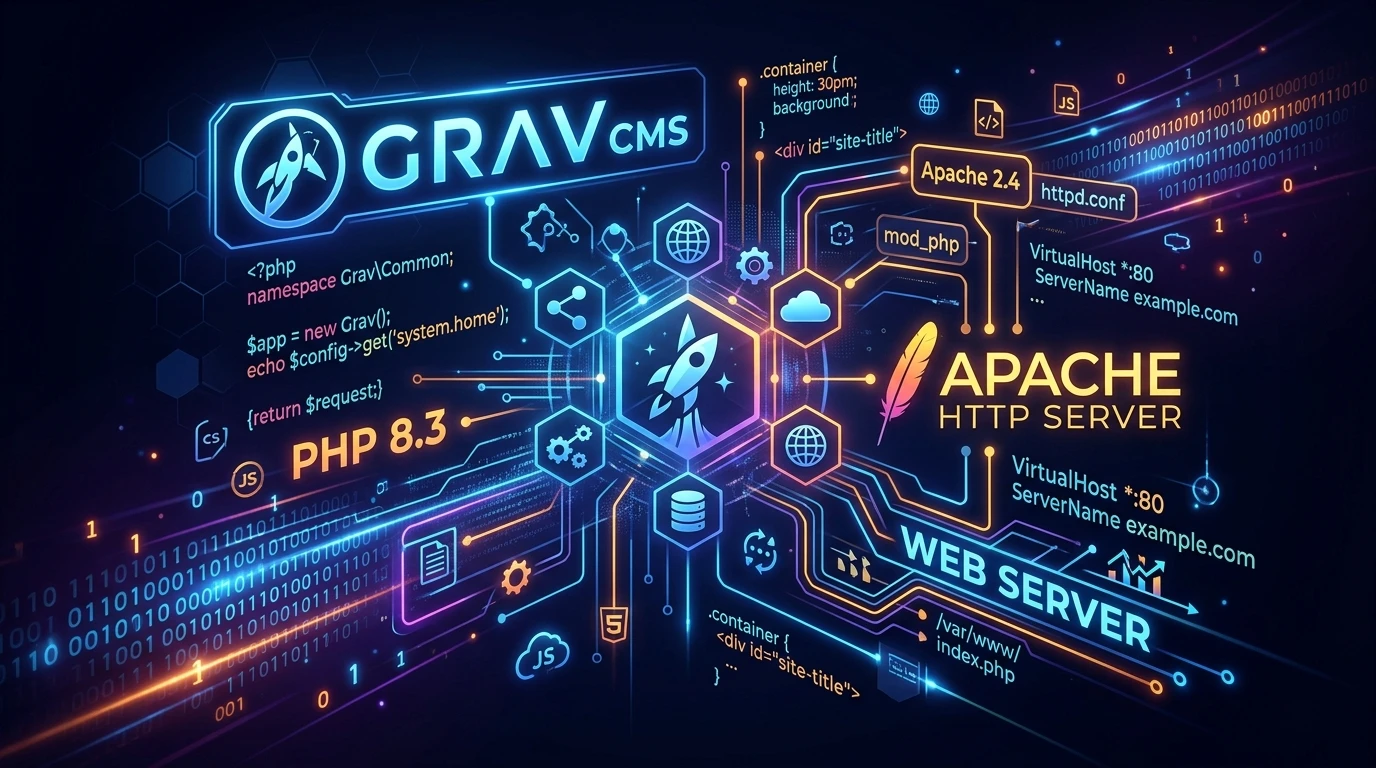
Our tailored LAMP container stack running on Linux enterprise infrastructure includes:
- Linux Server Kernel: Secure, hardened host environment with container namespace isolation.
- PHP 8.3 FPM: Configured with OPcache preloading and JIT compilation.
- Apache 2.4: Configured with optimized
mod_rewriterules and HTTP/2 protocol support. - Automated Permissions: Live file sync with automated permissions management.
Stay tuned for more upcoming tutorials on agentic AI workflows, web security, and cloud infrastructure!